

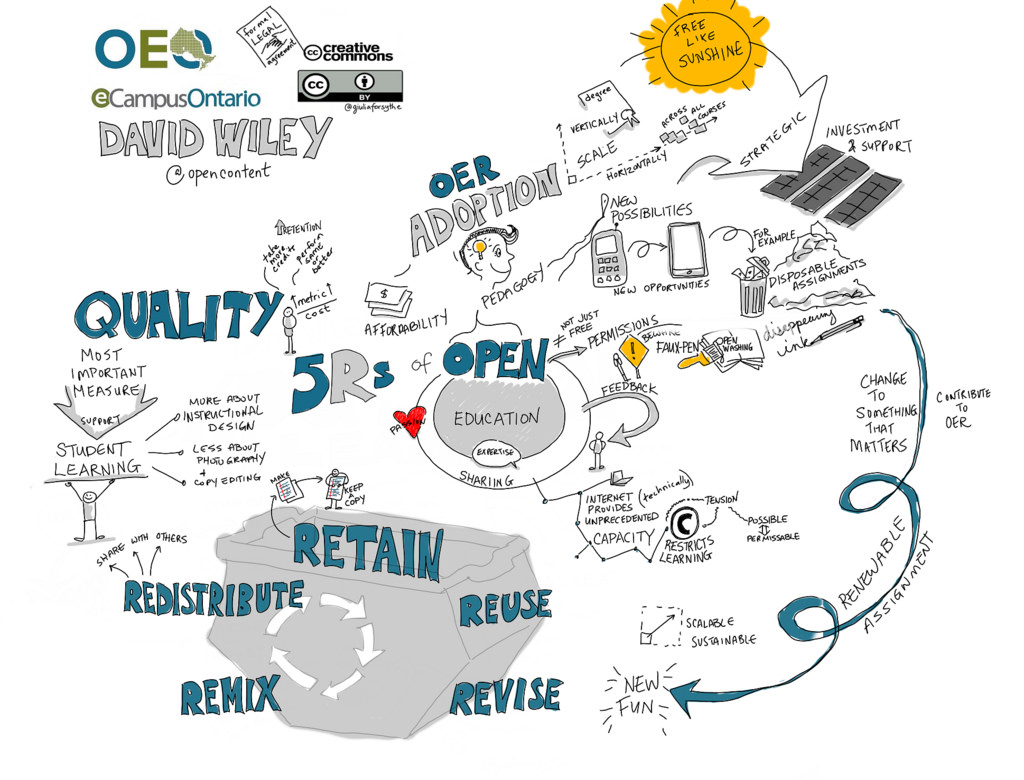
Remember that feeling when you first started teaching online? The excitement mixed with a healthy dose of "where do I even begin?!" Finding the right resources can feel like searching for a needle in a haystack, especially when you're trying to keep costs down for your students. But what if I told you there's a treasure trove of materials out there, just waiting to be used, and completely free? This post will explore leveraging Open Educational Resources (OER) in Your Online Teaching . Imagine providing high-quality learning materials without breaking the bank – or your students' banks! This meta description highlights the practical benefits of OER and encourages online teachers to explore cost-effective resources.
We'll dive into what OER actually are , the incredible benefits they offer for both you and your students, and most importantly, how to find and implement them effectively in your online courses. We'll look at everything from textbooks and lesson plans to videos and interactive simulations – all available under licenses that allow for free use and adaptation. Think of the possibilities! You can tailor content to perfectly fit your students' needs, update materials instantly to reflect current events, and even collaborate with other educators to create even better resources.
So, who exactly should be paying attention to this whole OER thing? Well, if you're an online instructor looking to enhance your courses, reduce student costs, and increase accessibility, then this is definitely for you. Whether you're teaching at a university, community college, or even offering online courses independently, OER can be a game-changer. Maybe you're feeling overwhelmed by the sheer volume of information out there, or perhaps you're not sure where to start. Don't worry, we'll break it all down step-by-step, providing you with practical tips and resources to get you started on your OER journey.
In short, exploring leveraging Open Educational Resources (OER) in Your Online Teaching offers a path to creating more engaging, affordable, and accessible learning experiences. By understanding the benefits, finding reliable sources, and adapting OER to fit your specific needs, you can significantly impact your students' success and satisfaction. It's about empowering both yourself and your learners in a rapidly evolving educational landscape. Let's unlock the potential of OER together and revolutionize online teaching!
What Exactly Are Open Educational Resources?
OER are teaching, learning, and research materials in any medium – digital or otherwise – that reside in the public domain or have been released under an open license that permits no-cost access, use, adaptation, and redistribution by others with no or limited restrictions. Basically, they're free to use, adapt, and share. Think of it as the Wikipedia of educational materials. Unlike traditional copyrighted materials, OER provide educators with the freedom to customize content to meet the specific needs of their students and courses. This can include textbooks, lesson plans, videos, assessments, and even entire courses. The core principle is that education should be accessible and affordable for everyone.
Why Should I Bother with OER?
Let's be honest, changing your teaching methods can be daunting. But the benefits of OER are too good to ignore:
Cost Savings: This is the big one. Textbooks are expensive! OER can significantly reduce the financial burden on students, making education more accessible. Imagine how much easier it would be for your students to focus on learning if they weren't constantly stressed about affording their course materials.
Customization: Tired of textbooks that don't quite fit your course objectives? OER allow you to adapt materials to perfectly match your curriculum. You can add, remove, or modify content to ensure it's relevant and engaging for your students.
Accessibility: OER are often available in multiple formats, making them more accessible to students with disabilities. Plus, the open licensing encourages adaptation for accessibility needs.
Up-to-Date Content: Traditional textbooks can quickly become outdated. OER can be easily updated and revised to reflect the latest research and developments in your field. This ensures that your students are learning the most current information.
Collaboration: OER encourage collaboration among educators. You can share your adapted materials with others and benefit from the work of your colleagues. This fosters a community of shared knowledge and resources.
Finding the Right OER: Where Do I Start?
Okay, you're sold on the idea of OER, but where do you actually find them? Here are some reputable sources to get you started:
OER Commons: A digital public library that allows you to search and discover OER. They have a vast collection of materials across various subjects and educational levels.
MERLOT (Multimedia Educational Resource for Learning and Online Teaching): A curated collection of OER with peer reviews and user ratings.
OpenStax: A nonprofit organization that publishes free, peer-reviewed textbooks for college and high school courses.
Creative Commons Search: A search engine that allows you to find openly licensed images, videos, and other content.
Your Institution's Library: Many libraries are now actively curating OER collections. Check with your librarian to see what resources are available at your institution.
Adapting and Implementing OER: Making It Your Own
Finding the right OER is just the first step. You'll also need to adapt and implement them effectively in your online courses. Here are some tips:
Review and Evaluate: Carefully review the OER to ensure it aligns with your course objectives and learning outcomes. Consider its accuracy, relevance, and overall quality.
Adapt and Customize: Don't be afraid to modify the OER to fit your specific needs. You can add your own examples, case studies, or activities.
Integrate into Your LMS: Seamlessly integrate the OER into your learning management system (LMS). Provide clear instructions for students on how to access and use the materials.
Provide Attribution: Always give proper attribution to the original creators of the OER. This is essential for respecting copyright and open licensing terms.
Solicit Student Feedback: Ask your students for feedback on the OER. This will help you identify areas for improvement and ensure that the materials are meeting their needs.
Overcoming Challenges and Embracing Opportunities
Using OER isn't always a walk in the park. You might encounter some challenges along the way. Here's how to navigate them:
Addressing Concerns About Quality
One common concern is the perceived quality of OER. While some OER may not be as polished as commercially produced materials, many are rigorously peer-reviewed and of excellent quality. The key is to carefully evaluate each resource before using it in your course. Look for materials that have been vetted by reputable organizations or institutions. Don't be afraid to supplement OER with other high-quality resources if needed.
Dealing with Limited Support
Unlike commercial textbooks, OER may not come with extensive support materials like instructor's manuals or test banks. However, many OER providers are actively developing these resources. Check the OER's website or contact the provider to see what support materials are available. You can also create your own support materials, such as quizzes, discussion prompts, and homework assignments.
Navigating Copyright and Licensing
Understanding copyright and open licensing can be tricky. Be sure to carefully read the license associated with each OER to understand the terms of use. Most OER are licensed under Creative Commons licenses, which allow for various levels of reuse and adaptation. If you're unsure about the terms of a particular license, consult with your institution's legal counsel or a copyright expert.
Embracing the Opportunities
Despite these challenges, the opportunities presented by OER are immense. By embracing OER, you can create more engaging, affordable, and accessible learning experiences for your students. You can also contribute to a growing movement of educators who are committed to open education. This can be incredibly rewarding, knowing that you're making a difference in the lives of your students and the broader educational community.
Real-World Examples: OER in Action
Let's look at some real-world examples of how educators are successfully using OER in their online courses:
Dr. Smith, a professor of psychology: She replaced her expensive textbook with a free, open-source textbook. She also created her own videos and interactive simulations to supplement the textbook. As a result, her students' grades improved, and they reported feeling more engaged with the course material.
Mr. Jones, a high school math teacher: He uses OER lesson plans and worksheets in his online math course. He also encourages his students to create their own OER, such as video tutorials and practice problems. This helps them develop a deeper understanding of the material and contribute to the open education movement.
Ms. Brown, a community college instructor: She collaborated with other instructors to create a free, online course on introductory sociology. The course uses OER textbooks, videos, and assessments. It has been widely adopted by community colleges across the country and has helped thousands of students access affordable education.
These examples demonstrate the power of OER to transform online teaching and learning. By embracing OER, you can create more innovative, effective, and equitable learning experiences for your students.
FAQ: Your Burning Questions Answered
Still have questions about leveraging Open Educational Resources (OER) in Your Online Teaching ? Let's tackle some common ones:
What are the different types of open licenses?
The most common type of open license is the Creative Commons license. There are several variations of Creative Commons licenses, each with different terms of use. Some licenses allow for commercial use, while others do not. Some require attribution, while others do not. Be sure to carefully read the terms of the license before using an OER. The main types are:
CC BY (Attribution): Allows others to distribute, remix, adapt, and build upon your work, even commercially, as long as they credit you for the original creation. This is the most accommodating of licenses offered.
CC BY-SA (Attribution-ShareAlike): Allows others to remix, adapt, and build upon your work, even commercially, as long as they credit you and license their new creations under the identical terms.
CC BY-NC (Attribution-NonCommercial): Allows others to remix, adapt, and build upon your work non-commercially, and although their new works must also acknowledge you and be non-commercial, they don’t have to license their derivative works on the same terms.
CC BY-NC-SA (Attribution-NonCommercial-ShareAlike): Allows others to remix, adapt, and build upon your work non-commercially, as long as they credit you and license their new creations under the identical terms.
CC BY-ND (Attribution-NoDerivatives): Allows for redistribution, commercial and non-commercial, as long as it is passed along unchanged and in whole, with credit to you.
CC BY-NC-ND (Attribution-NonCommercial-NoDerivatives): The most restrictive of the six main licenses, only allowing others to download your works and share them with others as long as they credit you, but they can’t change them in any way or use them commercially.
How do I attribute OER properly?
Attributing OER is essential for respecting copyright and open licensing terms. A good attribution includes the following information:
Title of the work Author of the work Source of the work (URL) License of the work
For example: "Introduction to Psychology" by John Smith is licensed under a Creative Commons Attribution 4.0 International License. Retrieved from [insert URL here].
What if I can't find the exact OER I need?
If you can't find the exact OER you need, consider creating your own. You can adapt existing OER or create entirely new materials. You can also collaborate with other educators to create OER together. By creating your own OER, you can contribute to the open education movement and help other educators provide affordable and accessible education to their students.
How can I encourage my colleagues to use OER?
Encouraging your colleagues to use OER can be challenging, but there are several strategies you can try:
Share your success stories: Tell your colleagues about the positive impact OER has had on your students and your teaching.
Offer training and support: Provide training and support to help your colleagues learn how to find, adapt, and implement OER.
Collaborate on OER projects: Work with your colleagues to create OER together.
Advocate for OER at your institution: Encourage your institution to adopt policies that support the use of OER.
The Future of OER in Online Education
The future of OER in online education is bright. As more educators and institutions embrace OER, the quality and availability of open educational resources will continue to improve. Technology will also play a key role in the future of OER. New tools and platforms are emerging that make it easier to find, adapt, and share OER. Artificial intelligence (AI) is also being used to create personalized OER that are tailored to the specific needs of individual students.
The open education movement is gaining momentum around the world. More and more countries are investing in OER initiatives and promoting the use of open educational resources. This global movement will help to ensure that education is accessible and affordable for everyone, regardless of their location or socioeconomic status.
Conclusion: Embracing the Open Education Revolution
Leveraging Open Educational Resources (OER) in Your Online Teaching is more than just a cost-saving measure; it's a powerful way to enhance the learning experience for your students and contribute to a more equitable and accessible educational landscape. By understanding the benefits, finding reliable sources, adapting OER to fit your needs, and addressing potential challenges, you can unlock the full potential of open education. So, take the plunge, explore the world of OER, and join the open education revolution! Your students – and your wallet – will thank you for it. And remember, every contribution, no matter how small, helps to build a richer and more accessible learning environment for all.
